
Parametric pottery
Parametric pottery, in plain clay language.
Parametric design sounds like an engineering degree. At the wheel it is an old idea: a pot is a family of moves, and one move changes the whole pot in a way that still makes sense. VASE 3D puts that idea in the browser.
In a parametric studio the form is driven by named controls: height, belly, opening, twist, pattern depth. You do not push polygons around. You pull on a control, and the whole vessel recomputes as one consistent, watertight piece.
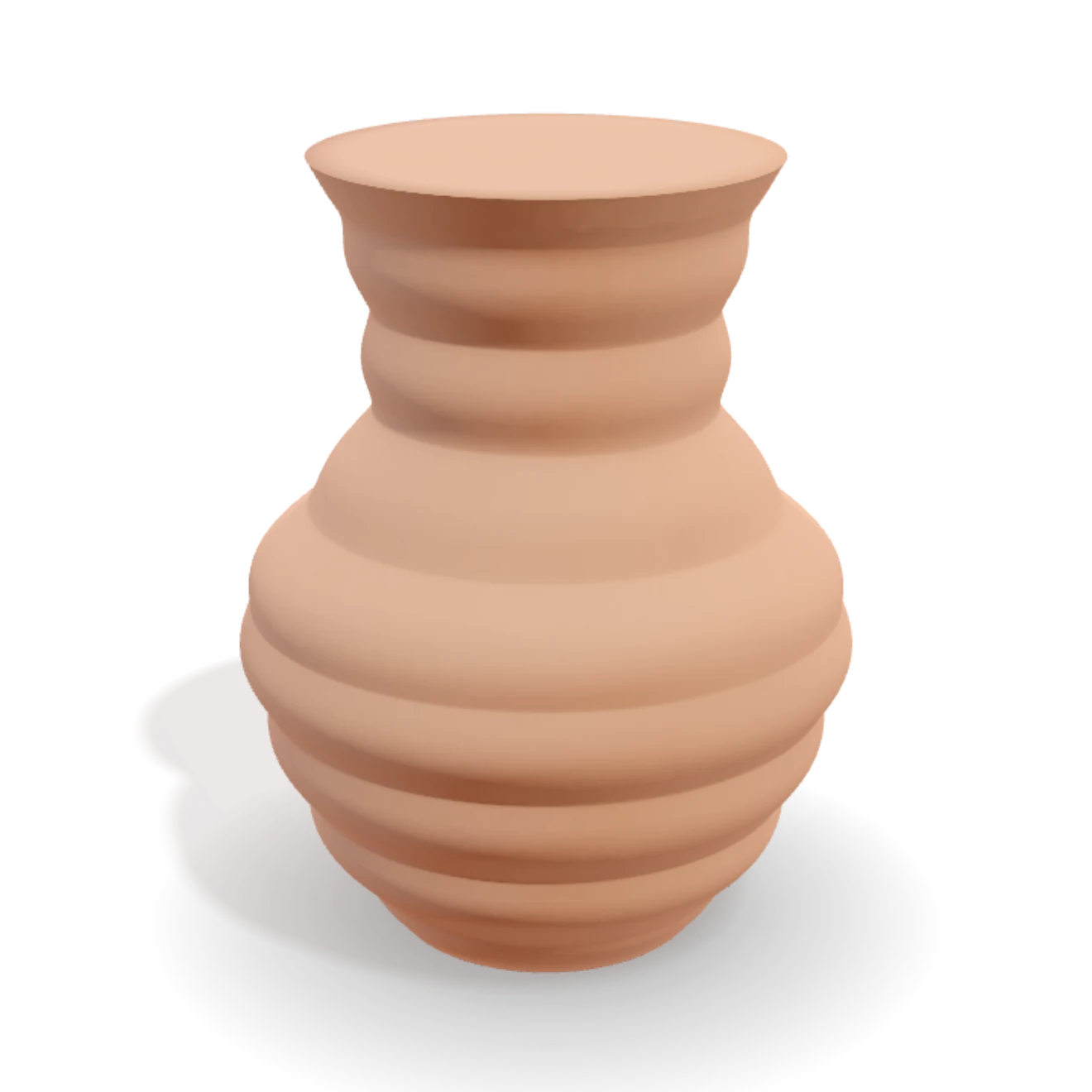
An old idea with new hands
Production potters have always worked parametrically, without the word. A board of mugs from the same hands shares a foot, a belly and a rim because the potter holds those proportions in muscle memory. Parametric pottery writes the proportions down, so you can pull on them, push them past where a wet wall would slump, and come back tomorrow to the exact same pot.
What the parameters buy you
One pot becomes a series
Keep the profile, change the scale, and a cup, a bottle and a bowl come off the same form. A matched set is one afternoon, not three.
Controlled surprise
Roll the die and the studio deals a fresh combination of form and pattern. Every result is a real setting you can read, keep or nudge, so exploring never destroys your work.
150+ patterns as ingredients
Twists, flutes, ribs, scales and carved relief stack in a timeline. The order is a parameter too, and reordering it is a new pot.
A glaze you judge early
Pour a living glaze that flows, breaks and pools on the actual form, so the finish is part of the design instead of a gamble at the end.
Watertight by construction
The geometry closes cleanly from foot to rim no matter how far you push the parameters. No setting can produce a broken mesh.
Real prints at the end
Export STL, OBJ or GLB and slice it for your own printer. Vase mode for a single spiralled wall, solid for a heavier piece.
Nothing here is AI-generated. A parameter is a promise: the same settings give the same pot, every time. The surprise comes from dice you can read, and the taste stays yours.
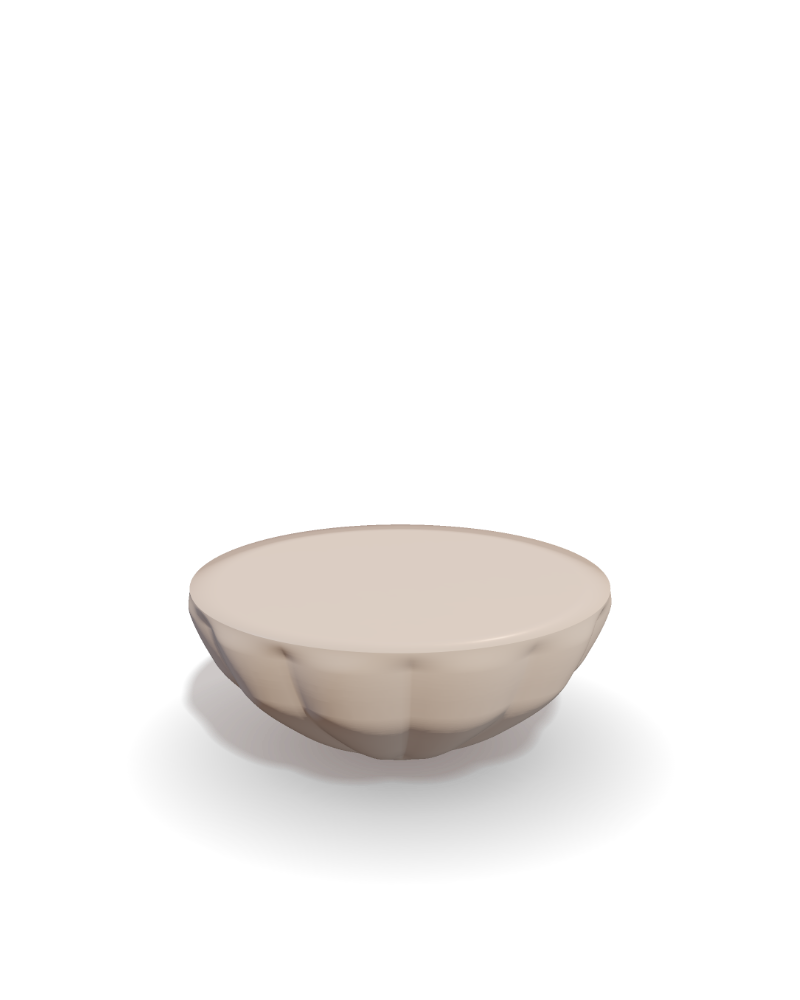
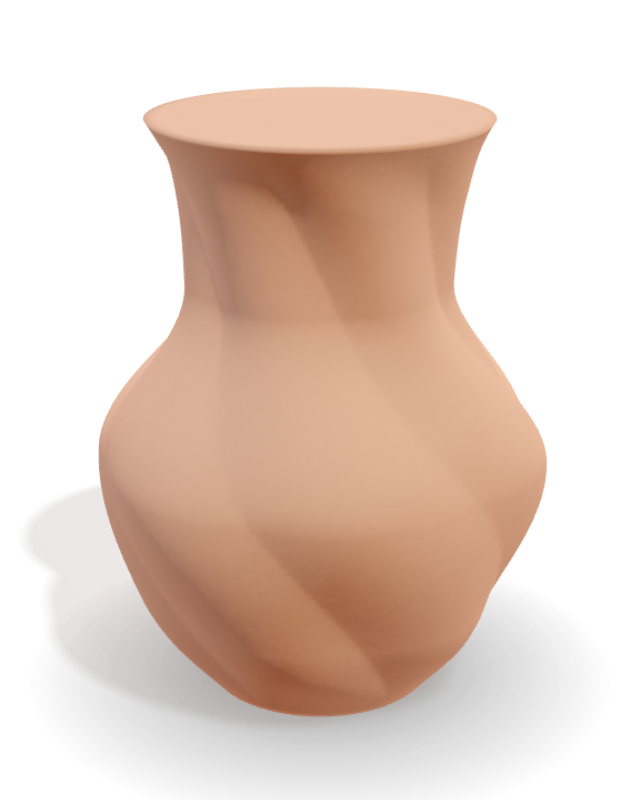
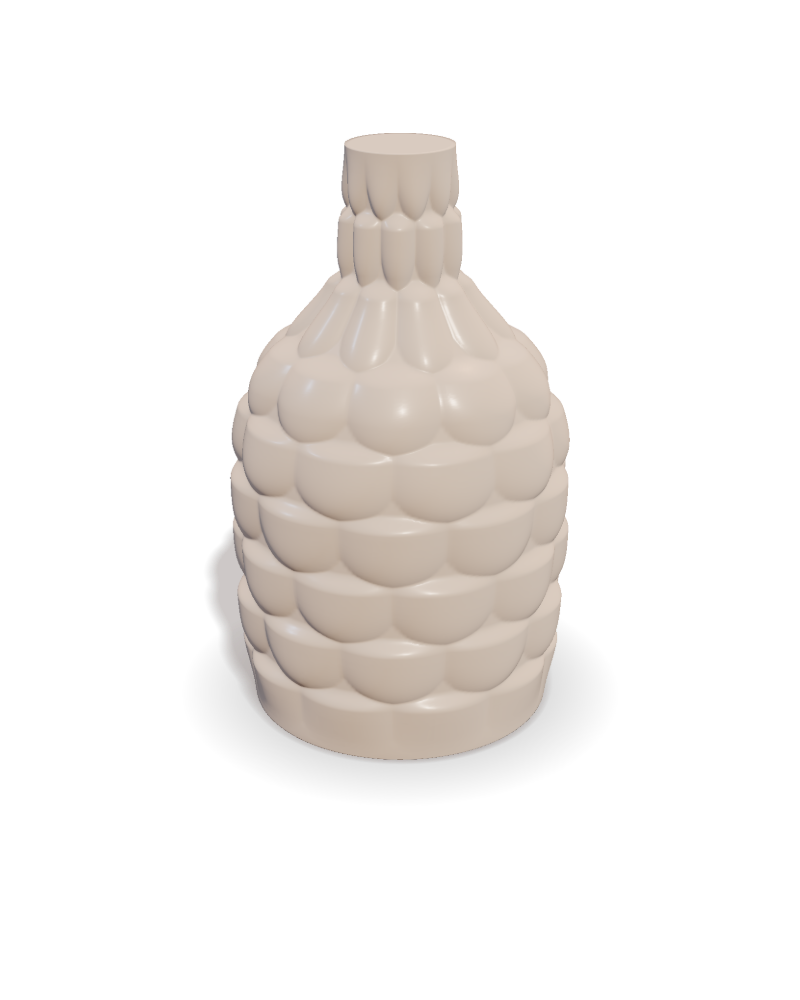
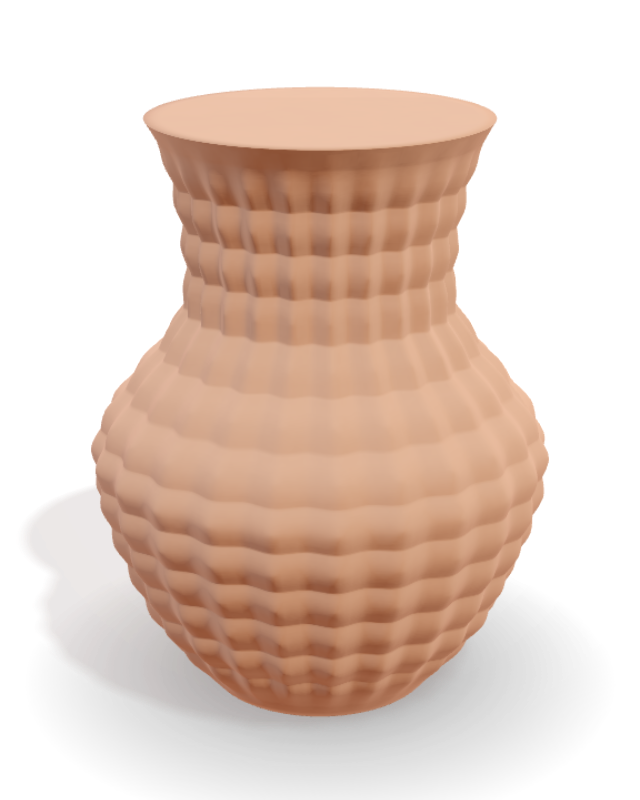
One silhouette, four surface decisions
Common questions
What is parametric pottery?
Pottery designed through named controls instead of fixed geometry. Height, belly, opening, twist and pattern are the parameters; change one and the whole form follows, the way a good pot answers a single move on the wheel. The payoff is a form you can revisit, resize and vary without starting over.
Is parametric design the same as AI or generative art?
No. Nothing in VASE 3D is AI-generated. A parameter is a promise: the same settings give the same pot, every time. The shuffle button rolls dice you can read, and every result is a setting you can keep, adjust or throw away.
Do I need to code or use node graphs?
No. Many parametric tools are built from code or node graphs. Here the parameters are hand controls on the vessel itself, named in a potter's language, and the studio runs in the browser. If you are weighing it against desktop tools, see how the two roads compare.